
Car Evolve
Heseri GamesSimulation
3.1656.00 Reviews
- Version
- 1.5.6
- Installs
- 1.00M
- Age Rating
- Everyone
Screenshots






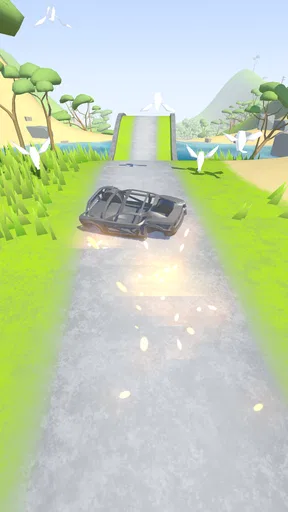

Our Review of Car Evolve
 Analysis by Appyee
Car Evolve is the kind of simulation game I can open for a few minutes and immediately understand: improve a car, send it forward, then decide how aggressively to keep developing it. That simple loop gives the game an approachable feel, but the interesting part is not the first upgrade. It is deciding when an improvement is worth the cost, when to save resources for a bigger jump, and when a quick launch is more useful than careful preparation. In my experience, that makes it more thoughtful than its short store description suggests.
Developed by Heseri Games, this is a free car simulation game for players who enjoy visible progress without having to learn a complicated racing system. It is rated for Everyone, so the presentation is easy to recommend for a broad audience. The game has also reached over a million installs, which fits its accessible design: you do not need to be a motorsport expert to understand what you are trying to do.
How the upgrade-and-launch loop shapes your decisions
The central appeal is the relationship between upgrading and launching. Instead of treating every action as an isolated button press, I found myself thinking in short planning cycles. An upgrade changes what the next launch can achieve, while a launch gives me a reason to judge whether the previous investment was sensible. That creates a small but satisfying decision space even when the controls remain uncomplicated.
The best way to approach a session is not to upgrade automatically whenever the option appears. I prefer to look at the next target first and ask whether a modest improvement is enough to reach it. Spending everything immediately can feel rewarding, but it may leave you poorly prepared for the next step. On the other hand, saving for too long slows the visible progress that makes this game enjoyable. The useful middle ground is to make upgrades with a purpose rather than treating them as routine spending.
This is where the game differs from a conventional racing title. A traditional racer usually asks me to master steering, braking, track position, or opponents. Car Evolve focuses more on progression choices. It is closer to a compact management exercise wrapped in a car theme than to a full driving simulator. If you want realistic handling or detailed vehicle tuning, this will feel light. If you like watching a project become more capable through repeated decisions, the format is much more appealing.
I also appreciate that the game works well as a low-commitment activity. A realistic everyday use case is a short break while waiting for a bus or making coffee: I can open it, make a few deliberate choices, launch the car, and stop without needing to remember a complicated race setup. That convenience is a genuine strength, although players looking for long, uninterrupted sessions may eventually find the repeated structure predictable.
Planning upgrades instead of chasing every immediate gain
One of the more useful habits I developed was separating “progress now” from “progress later.” A small upgrade may improve the next launch, but a larger improvement can change the pace of several launches afterward. The right choice depends on how close I am to the next meaningful milestone. When the gap is small, a focused purchase makes sense. When the gap is large, patience becomes more valuable.
This creates a planning horizon that is easy to overlook. I am not only asking, “What helps this launch?” I am also asking, “Will this choice make the next few decisions easier?” That second question is where the simulation element becomes more interesting. A player who spends impulsively may still move forward, but someone who keeps a reserve can respond better when the current approach stops producing satisfying returns.
My practical advice is to avoid making several small improvements simply because they are available. Choose the one that addresses the immediate bottleneck, then test the result with a launch. If the outcome improves enough, continue with that line. If it does not, change direction rather than repeating the same purchase out of habit. This approach makes each cycle feel more informative and reduces the sense that progress is happening on autopilot.
That said, the game does not turn these choices into a complex spreadsheet. Its strength is that the consequences are readable. I can understand the broad relationship between an investment and the next attempt without calculating a long list of technical values. Players who enjoy deep vehicle setups may want more control, but casual simulation fans will probably prefer this clarity.
Risk, reward, and the cost of moving too quickly
The risk-and-reward element comes from deciding how much progress to pursue before launching. A cautious approach can protect resources and make the next upgrade easier to afford. An aggressive approach can produce faster visible movement, but it may also create a weaker position afterward. I found that the most satisfying decisions were not always the biggest ones; they were the choices that kept my next option open.
That matters because a launch is more than a victory screen or a progress animation. It is also a check on the quality of the plan that came before it. If I launch too early, I may gain immediate momentum but learn that the car is not ready for the next stage. If I wait too long, I may be spending time polishing a setup that already does enough. The game rewards awareness of that balance more than constant maximum spending.
For new players, I would recommend treating the first few cycles as observation rather than optimization. Notice what changes after an upgrade, how quickly the next improvement becomes realistic, and whether a launch feels like a genuine step forward or merely a repeated action. This prevents the common mistake of assuming that every available improvement has equal value.
There is also a psychological trade-off. Rapid upgrades make the game feel lively, while saving creates a quieter but more deliberate rhythm. Neither style is automatically correct. If I am playing casually, I may accept a less efficient choice because seeing immediate progress is part of the fun. If I am trying to stretch a session or make resources last, I prefer fewer, better-timed decisions.
The free-to-play structure should be considered here. Car Evolve is free to download and play, while its optional in-app purchases range from a few dollars to several dozen dollars per item. I would approach those purchases carefully. The core appeal comes from making progression decisions, so spending to remove too much waiting or uncertainty could reduce the part of the game that gives it character. Players who prefer a completely unrestricted progression path should keep that trade-off in mind before buying anything.
Adapting when the first plan stops working
Adaptation is important because a plan that works for one stage may not remain the best choice later. I found it easy to fall into a pattern of repeating the same upgrade logic, especially after a successful launch. The more useful approach is to reassess after each meaningful change. Ask whether the previous priority still matters, or whether another improvement now offers better value.
This is a small form of counterplay against the game’s own rhythm. The system invites repetition, but I do not have to play every cycle identically. I can choose short-term momentum, conservative saving, or a balanced route depending on how I want the session to feel. That flexibility is more valuable than a single “correct” strategy, because it lets the game accommodate different kinds of players.
A concrete example is a player who opens the game during a short break and wants a quick sense of accomplishment. That player should favor a clear, immediate upgrade and launch rather than holding resources for an uncertain future benefit. Someone playing for a longer stretch can afford to delay a launch and compare the likely value of several choices. The game works for both situations, but the better decision changes with the time available.
I also think adaptation helps with the game’s limitations. Because the loop is focused, repetition can become noticeable. Changing the way I evaluate upgrades gives the session more variety, even when the underlying actions remain familiar. It does not transform the game into a full management simulator, but it does prevent every launch from feeling like a completely automatic tap.
Players who need constant novelty should be realistic about this point. Car Evolve is not designed around the broad variety of a large racing game, a story-driven adventure, or a detailed garage simulator. Its appeal comes from refining a compact loop. If that loop does not interest you, changing strategies will only help for a while.
What keeps the progression interesting over time
The long-term question is whether the upgrade-and-launch structure remains satisfying after the initial excitement fades. For me, the answer depends on what I expect from a simulation game. If I want a calm progression game that fits into short sessions, the structure has staying power. Each return gives me a simple objective and a chance to make a slightly better decision than before.
If I expect extensive customization, authentic driving physics, or a large collection of distinct activities, the game will probably feel limited. Its depth comes from timing and resource judgment rather than from a wide range of systems. That is an important distinction when comparing it with the usual alternatives in the category. A full car simulator offers more technical control; an arcade racer offers more immediate action; an idle-style progression game may require less active decision-making. Car Evolve sits between those approaches by asking for attention without demanding mastery.
The current version is 1.5.3, and the game’s broad audience is reflected in its average rating of 4.1 from around 2.9 thousand ratings. I would read that reception as a sign that the basic loop works for many players, not as a guarantee that everyone will enjoy the same pace. The game is easy to start, but its appeal depends on being comfortable with repetition and modest strategic choices.
One tip that improved my experience was to set a personal stopping point. Rather than continuing until the loop feels stale, I stop after reaching a planned upgrade or completing a short sequence of launches. This keeps the game feeling like a satisfying break instead of turning it into background tapping. It is especially useful for players who are sensitive to repetitive progression systems.
Another useful habit is to compare outcomes across sessions instead of judging a single launch too harshly. A choice that seems inefficient immediately may make sense if it opens a stronger next step. Conversely, a flashy improvement may not be worthwhile if it leaves the following cycle awkward. Looking at the sequence of decisions, rather than one result, is the best way to appreciate the game’s limited but meaningful depth.
Who should play it and who should choose something else
I would recommend Car Evolve to someone who likes cars but does not necessarily want a serious driving simulation. It suits players who enjoy upgrades, gradual improvement, and short sessions with a clear objective. It is also a reasonable choice for families and younger players because its Everyone rating matches its uncomplicated, approachable presentation.
I would be less likely to recommend it to a player searching for realistic vehicle behavior, competitive racing, or extensive customization. Those players will probably be happier with a dedicated racing simulator or a more feature-heavy garage game. Likewise, anyone who dislikes free-to-play progression should think carefully about whether the basic loop remains enjoyable without optional purchases. The game is at its best when the player likes making the decisions, not when the player is trying to bypass them.
The developer, Heseri Games, has kept the concept focused. That focus is both the game’s identity and its main limitation. There is little need to learn a complicated interface, but there is also less room for players who want many systems to manage. I see it as a compact simulation experience rather than a replacement for a full racing collection.
For an everyday recommendation, I would describe it as a good “one more cycle” game. It gives me enough control to feel involved, but not so much that opening it becomes work. The key is to play with a small plan: decide what the next upgrade should accomplish, launch when the timing makes sense, and stop before repetition outweighs the satisfaction of progress.
Car Evolve is free, supports devices running at least Android 7.1, and keeps its entry barrier low. Those practical details make it easy to try, while the optional purchases mean I would advise setting a spending limit before exploring them. The game does not need a purchase to explain its central idea; its value comes from whether that idea holds your attention.
My strategy verdict after spending time with the game
My final view is positive but measured. Car Evolve succeeds because it turns a very small set of actions into a sequence of decisions about timing, patience, and momentum. I enjoyed it most when I treated each launch as feedback and each upgrade as part of a short plan. That mindset reveals more depth than simply pressing the most obvious improvement every time.
The strongest reason to try it is its clear decision loop, not the promise of a complete car simulator. It offers a friendly way to enjoy vehicle progression without demanding long races or technical knowledge. The trade-off is that the same focused structure can feel repetitive, especially for players who need constant new mechanics or detailed control.
For me, the best strategy is to keep a reserve, target the upgrade that solves the current problem, and reassess after every launch rather than following a fixed routine. That keeps the risk-and-reward balance alive and makes adaptation matter. I would recommend it to casual simulation fans, younger players, and anyone who wants a quick car-themed progression game. I would point dedicated racers elsewhere.
Overall, Car Evolve is a modest, approachable game with enough planning to make its simple loop worthwhile. It will not replace a full racing simulator, but it does not need to. When I want a short session built around upgrading, launching, and deciding how far to push the next step, it delivers exactly that in a clean and easy-to-understand package.
Verdict
Strengths of Car Evolve
- Simple controls make it easy to start playing immediately.
- Short levels fit well into quick gaming sessions.
- Vehicle upgrades add a sense of progression.
- Bright visuals make the gameplay easy to follow.
- Works well for casual players seeking a relaxing experience.
Limitations of Car Evolve
- Gameplay can become repetitive after extended play.
- Progress may feel slow without frequent upgrades.
- Some levels offer limited challenge for experienced players.
- Ads may interrupt the experience between stages.
- The game may require considerable storage on older devices.
Other Releases by Heseri Games
View All
Real War: Not Fake
Action3.3

Shoot Die Repeat
Action3.1
Similar Picks in This Category
View All
Truckers of Europe 3
Wanda Software4.3

Town Building Life Simulator
XGame Global4.2

Fidget Toys Trading・Pop It 3D
Freeplay Inc4.7

Sculpt People
CrazyLabs LTD4.4

Scary Teacher 3D
Z & K Games4.2

Hair Tattoo: Barber Shop Game
CASUAL AZUR GAMES4.3
Frequently Asked Questions
What is Car Evolve and how does the gameplay work?
Car Evolve is a casual racing and progression game centered on upgrading a vehicle as it moves through different stages of development. Players typically guide the car along a track, collect rewards, avoid obstacles, and make choices that improve its performance or appearance. The gameplay is easy to understand, making it suitable for short sessions, although progression can become more challenging over time.
Is Car Evolve free to download and play?
Car Evolve can generally be downloaded for free on supported mobile devices, allowing players to try the main gameplay without an upfront purchase. However, free games may include optional in-app purchases for upgrades, currency, boosts, or other conveniences. Before downloading, it is worth checking the store listing for the current pricing details and reviewing purchase settings if children will be using the device.
Does Car Evolve require an internet connection?
The internet requirements may depend on the version of Car Evolve installed and the features being used. Basic gameplay may work without a constant connection, but advertisements, cloud saving, updates, rewards, or other online services can require internet access. If you plan to play while traveling or with limited data, test the game offline first and remember that some features may not be available.
Is Car Evolve suitable for children?
Car Evolve uses simple controls and colorful vehicle-focused gameplay, which can make it appealing to younger players. Nevertheless, parents should check the age rating, advertising content, privacy information, and in-app purchase options before allowing regular play. If the game displays frequent ads or includes optional purchases, parental controls and purchase restrictions are recommended to prevent accidental spending.
What devices are compatible with Car Evolve, and does it need much storage?
Compatibility depends on the specific Android or iOS version available in your region. Before installing Car Evolve, check the official store page for the required operating system, supported device information, and the latest update date. The initial download may be relatively small, but additional files, cached advertisements, and future updates can use more storage, so keeping free space available is advisable.
Play our best games!


